



Many people planning a long-term stay in Japan for an overseas assignment may wonder,
“How can I obtain a driver’s license that allows me to drive in Japan?”
In this article, we explain the types of driver’s licenses required to drive in Japan, as well as three ways foreign residents can obtain a Japanese driver’s license and the procedures for each method.
We will also outline important points to keep in mind when using a car in Japan as a foreign resident, so we hope you find this guide helpful.
Types of Driver’s Licenses Required to Drive in Japan
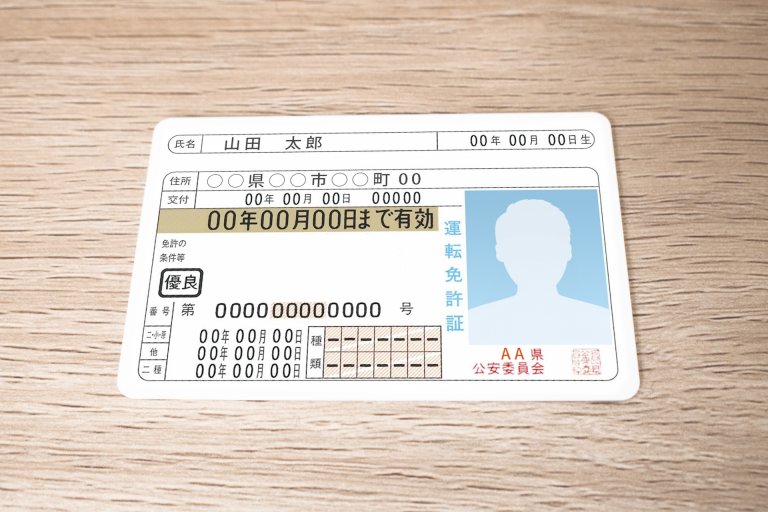
To drive a car in Japan, you must hold one of the following types of driver’s licenses:
- A Japanese driver’s license
- An International Driving Permit (IDP)
- An International Driving Permit (IDP)
Japanese driver’s licenses include several categories—such as Standard License, Semi-Medium License, Medium License, and Large License—each of which allows the holder to drive different types of vehicles.
In addition, if you hold an International Driving Permit issued under the Geneva Convention, you are allowed to drive in Japan for up to one year from the date of entry into Japan.
Furthermore, holders of driver’s licenses issued by countries recognized as having license systems equivalent to Japan—namely Switzerland, Germany, France, Belgium, Monaco, and Taiwan—may drive in Japan provided that an official Japanese translation of the license is attached.
Three Ways Foreign Residents Can Obtain a Driver’s License in Japan

There are three main ways for foreign residents to obtain a driver’s license in Japan:
- Converting a foreign driver’s license to a Japanese driver’s license
- Using an International Driving Permit (IDP)
- Obtaining a Japanese driver’s license from scratch
If you are from a country that issues International Driving Permits, you can drive in Japan for up to one year during the permit’s validity period. However, if you plan to stay in Japan long-term, converting your foreign driver’s license to a Japanese license is generally the most suitable option.
If you do not hold a driver’s license in your home country, the appropriate approach is to obtain a Japanese driver’s license by completing the licensing process in Japan.
The detailed procedures for each of these three methods will be explained in the following sections, so please use them as a reference.
Steps to Convert a Foreign Driver’s License to a Japanese Driver’s License
The process for converting a foreign driver’s license to a Japanese driver’s license consists of the following four steps:
- Step 1: Check your eligibility
- Step 2: Confirm whether your country or region is exempt from certain tests
- Step 3: Prepare the required documents for license conversion
- Step 4: Take and pass the required examinations
Below, each step is explained in detail.
Step 1: Check Your Eligibility
To apply for the license conversion test, you must meet the following eligibility requirements:
- You must be 18 years of age or older
(16 or older for a standard motorcycle license, 20 or older for a medium vehicle license, and 21 or older for a large vehicle license) - Your visual acuity must be 0.3 or higher in each eye, and 0.7 or higher with both eyes
- Your foreign driver’s license must be equivalent to a Japanese license and still valid
- You must have resided in the issuing country for a total of at least three months after obtaining the license
- You must apply in person
To convert a foreign driver’s license to a Japanese one, you must meet all of these eligibility requirements and pass the required examinations.
Step 2: Confirm Countries and Regions Eligible for Test Exemptions
Some countries and regions are eligible for exemptions from certain tests when converting a foreign driver’s license to a Japanese driver’s license. Be sure to check whether your license qualifies.
| Countries and Regions Exempt from the Driving Skills Test | United States (Indiana) |
| Countries and Regions Exempt from Both the Written and Driving Skills Tests | United States (Ohio, Oregon, Colorado, Virginia, Hawaii, Maryland, Washington),Iceland, Ireland, United Kingdom, Italy, Australia, Austria, Netherlands, Canada,South Korea, Greece, Switzerland, Sweden, Spain, Slovenia, Czech Republic, Denmark,Germany, New Zealand, Norway, Hungary, Finland, France, Belgium, Poland, Portugal,Monaco, Luxembourg, Taiwan |
Step 3: Prepare the Required Documents for License Conversion
The following documents are required to convert a foreign driver’s license to a Japanese driver’s license:
- Application form
- Medical questionnaire (regarding health conditions)
- Application photo (3.0 × 2.4 cm)
- Copy of your resident record (jūminhyō)
- Identification documents, such as a My Number Card or passport
- Your foreign driver’s license
- An official Japanese translation of the foreign driver’s license
- Documents proving that you resided in the issuing country for at least three months after obtaining the license
- Application fee
Once you have prepared these documents, submit your application at a driver’s license center operated by the prefectural police that has jurisdiction over your place of residence.
In Tokyo, for example, procedures can be completed at facilities such as the Samezu Driver’s License Examination Center or the Fuchu Driver’s License Examination Center.
Step 4: Take the Required Tests and Pass
To convert a foreign driver’s license to a Japanese driver’s license, you may be required to complete the following four assessments:
| Document Review | A review of your application documents, along with an interview regarding the driving test you took when obtaining your foreign license. |
| Aptitude Test | Tests to assess vision and basic physical functions. |
| Written Test | An examination covering traffic signs and traffic rules. |
| Driving Skills Test | A practical driving test that evaluates actions such as entering and exiting the vehicle, stopping at stop signs, navigating intersections, passing designated obstacles, and driving behavior near pedestrian crossings. |
During the document review, the interview is conducted in Japanese. If you do not speak Japanese, an interpreter is required. However, the written test is available in multiple languages.
The driving skills test is scored out of 100 points, with 70 points required to pass. However, it is widely regarded as a difficult test. Certain violations—such as driving in the wrong direction—result in immediate failure, and many infractions lead to a 10-point deduction for a single mistake.
Steps to Using an International Driving Permit (IDP) in Japan

There are two main steps to using an International Driving Permit (IDP) in Japan:
- Step 1: Check the conditions for using an IDP in Japan
- Step 2: Obtain an International Driving Permit issued under the Geneva Convention
Below, each step is explained in detail.
Step 1: Check the Conditions for Using an IDP in Japan
The main conditions for using an International Driving Permit in Japan include the following:
- The IDP must be within one year of its date of issuance, and you must also be within one year of your date of entry into Japan
- You must not violate the “three-month rule”
Please note that the validity period is not simply one year from your arrival in Japan. The IDP must also be used within one year from the date it was issued, so careful attention to the time limits is required.
In addition, if you leave Japan and obtain a new International Driving Permit while staying outside Japan for less than three months, then re-enter Japan, you are generally not permitted to drive in Japan under this rule.
Step 2: Obtain an International Driving Permit Issued Under the Geneva Convention
Be sure to obtain an International Driving Permit issued in accordance with the Geneva Convention.
Even if an IDP is issued by a country that is a party to the Geneva Convention, IDPs issued under other conventions—such as the Vienna Convention—are not valid for driving in Japan.
Steps to Obtain a Japanese Driver’s License from Scratch
There are two main steps to obtaining a Japanese driver’s license from scratch:
- Step 1: Attend a driving school
- Step 2: Pass the driver’s license examinations
Below, each step is explained in detail.
Step 1: Attend a Driving School
To obtain a Japanese driver’s license from scratch, the most common approach is to attend a driving school, where you will receive instruction on traffic laws and driving skills, and then pass the required examinations.
By enrolling in a designated driving school officially approved by the police, you can benefit from having the practical driving test at the driver’s license center waived, provided that you pass both the written and practical tests at the driving school.
Step 2: Pass the Driver’s License Examinations
If you attend a designated driving school, you will be required to take the following examinations:
- Aptitude test
- Learner’s permit test (written test and practical driving test)
- Graduation examination (practical driving test)
- Full license examination (aptitude test and written test)
Up to the graduation examination, all tests are conducted at the designated driving school. The final full driver’s license examination is taken at a driver’s license center.
Important Points for Foreign Residents Driving in Japan

The following are four key points that foreign residents should keep in mind when driving in Japan:
- Driving without a valid license is a serious legal offense
- Follow Japanese traffic rules
- Respond appropriately in the event of a traffic accident
- Comply with insurance and vehicle inspection requirements
Each of these points is explained in detail below.
Driving Without a License Is a Serious Legal Offense
In Japan, driving without a valid license is a serious violation of the law. Criminal penalties may include up to three years in prison or a fine of up to ¥500,000.
Driving without a license includes situations such as:
- Not having obtained a driver’s license
- Driving with an expired license
- Driving while your license is suspended or revoked
If an accident occurs while driving without a license, the driver may be required to pay extremely high compensation, potentially ranging from tens of millions to hundreds of millions of yen. To avoid these risks, be sure to obtain and maintain a valid driver’s license.
Follow Japanese Traffic Rules
Japan has specific traffic rules that must be followed at all times when driving, including:
- Driving on the left side of the road
- Traffic signals:
- Green: You may proceed
- Yellow: Stop (you may proceed only if you have already crossed the stop line or cannot stop safely)
- Red: Stop
- All passengers must wear seat belts
- No drunk driving
- Using a mobile phone while driving is prohibited
- Wearing earphones or headphones while driving is prohibited
Because these rules may differ from those in your home country, it is important to familiarize yourself thoroughly with Japanese traffic regulations before driving.
Respond Appropriately in the Event of a Traffic Accident
If a traffic accident occurs, follow these steps:
- Stop the vehicle immediately in a safe location, such as the side of the road
- Contact emergency services and the police
- Visit a hospital for a medical examination
- Apply for an official traffic accident certificate
If there are any injured persons, call 119 immediately to request an ambulance.
In Japan, reporting traffic accidents to the police is mandatory, even if no one is injured. In such cases, call 110 to contact the police.
A traffic accident certificate, which is required for insurance claims and other procedures, can be obtained from the Japan Safe Driving Center or related offices.
Comply With Insurance and Vehicle Inspection Requirements
In Japan, all vehicle owners are required to:
- Enroll in Compulsory Automobile Liability Insurance (CALI)
- Undergo regular vehicle inspections (shaken)
Compulsory Automobile Liability Insurance covers basic compensation for injuries or death caused to third parties and is mandatory for all vehicles.
Vehicle inspections (shaken) are periodic inspections to ensure that vehicles meet safety and environmental standards. Depending on the type of vehicle, inspections are required every one or two years.
Summary:How to Get a Driver’s License in Japan as a Foreigner: What Expats Should Know

In this article, we explained the types of driver’s licenses required to drive in Japan, as well as the three ways foreign residents can obtain a driver’s license and the procedures involved in each option.
If you are an expat looking for luxury rental properties in Tokyo for an overseas assignment, we recommend exploring properties through APARTMENTS TOKYO by Asian Property, a platform specializing in high-end real estate in Tokyo.APARTMENTS TOKYO provides comprehensive English-language support to help expatriates find the right home in Tokyo smoothly and with confidence. Please feel free to contact us for assistance with your property search.
Schedule a Free Consultation or Property Viewing
→ Contact Form
Receive Exclusive Property Updates & Special Campaigns
→ Newsletter Signup




< Prev Posts
How to Open a Bank Account and Set Up Utilities in Japan: A Guide for Foreign Residents

Next Posts >
Top 5 Luxury Penthouses in Tokyo: Sky-High Living for Discerning Buyers